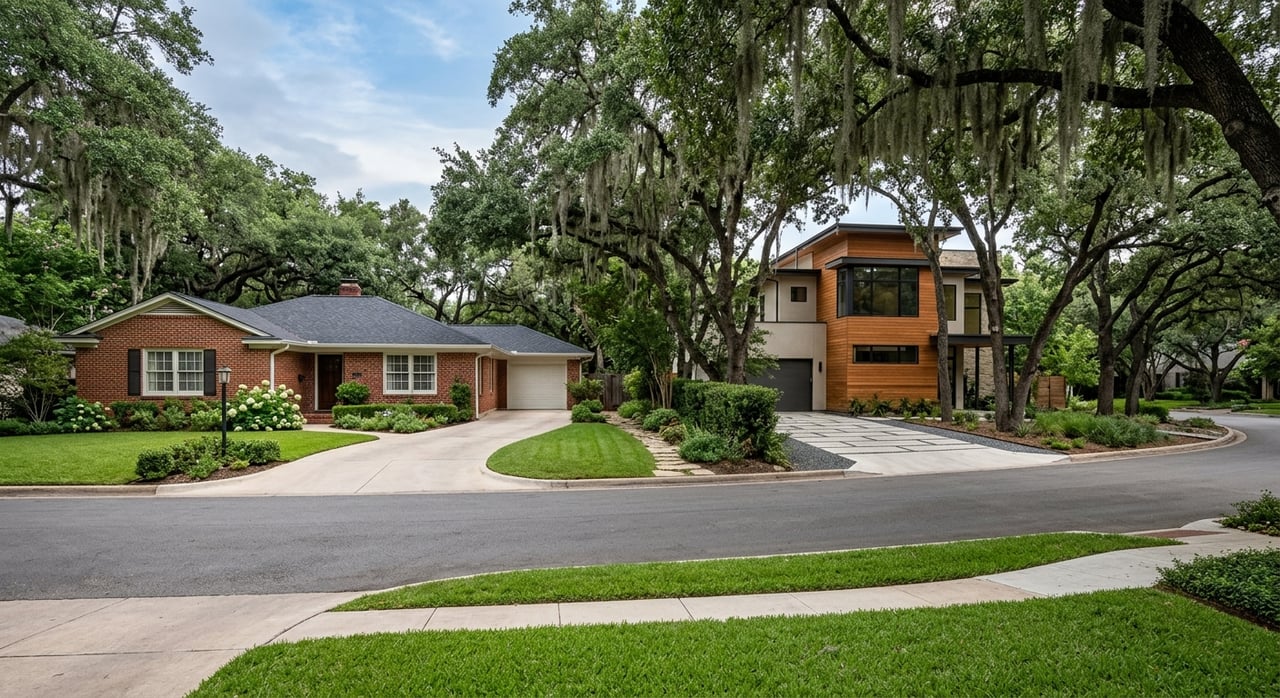
If you are looking at 77055 for a teardown, custom build, or small-scale infill project, one truth matters right away: not every lot plays by the same rules. Spring Branch and Spring Valley can sit just minutes apart, yet redevelopment potential can change quickly based on city limits, lot shape, setbacks, and neighborhood development patterns. If you want to size up opportunity with more confidence, this guide will walk you through what to watch, where the friction points tend to be, and how to think about a parcel before you go deeper. Let’s dive in.
Why 77055 Draws Redevelopment Interest
The 77055 ZIP code offers a mix of market activity, older housing stock, and visible replacement construction that naturally attracts buyers, builders, and investors. HAR reports roughly 330 active for-sale listings in 77055 and an average home price of $832,153 as of July 2026. In the broader Spring Branch market area, the June 2026 single-family average price was $672,530, the median was $490,000, and homes averaged 14.5 days on market.
Those numbers matter because they suggest both demand and pricing support for thoughtful redevelopment. They also help explain why buyers continue to study lots, older homes, and under-improved parcels in this part of Houston. In addition, the Houston-Galveston Area Council notes that the Long Point corridor is the traditional Main Street of the community and is beginning to undergo redevelopment.
Start With the Governing Rules
One of the biggest mistakes in 77055 is assuming every parcel follows the same development framework. It does not. Some properties fall within Spring Valley Village, while others are on the Houston side of 77055.
That distinction matters because Houston does not have a zoning code, but it still regulates development through plats, building lines, setbacks, access review, and Chapter 42 compliance. Houston also uses tools such as Special Minimum Lot Size and Special Minimum Building Line rules in areas where those protections have been adopted to preserve existing development patterns.
Spring Valley Village is more rule-driven. The city’s Planning and Zoning Commission reviews proposed construction, subdivision plans, replats, setback lines, minimum lot sizes, non-permeable improvement ratios, and tree protection matters. The city also requires permits for residential and commercial construction and enforces adopted building and design codes through the permit process and certificates of occupancy.
Spring Branch Is Not One Uniform Submarket
A second common mistake is treating Spring Branch as one single redevelopment story. Official City of Houston community profiles show the area is more varied than many buyers first assume.
Spring Branch North is described as mostly single-family and mostly deed-restricted. Spring Branch East is the oldest part of the larger Spring Branch community and includes new home construction near Wirt Road and in gated subdivisions replacing deteriorated apartment complexes. Spring Branch Central includes many small subdivisions along with many apartment complexes, while Spring Branch West is largely deed-restricted single-family, with multifamily concentrated along Long Point, Gessner, and Blalock and new home construction resuming on small sites where land prices have risen.
This mix is important because redevelopment potential often follows local block patterns, not just ZIP code labels. A lot with upside on one street may face very different expectations a few blocks away. The best early read usually comes from comparing the parcel to nearby replacement activity, lot configurations, and the surrounding built pattern.
Look for Housing Stock Clues
The age and condition of surrounding homes can help you spot where redevelopment may be more realistic. City year-built charts for the Spring Branch submarkets show substantial post-2000 housing in the area. That pattern often supports replacement construction activity rather than a preservation-only mindset.
That does not mean every older property is a teardown candidate. It does mean you should avoid assuming Spring Branch is dominated only by legacy housing stock. In several pockets, newer construction is already part of the established market pattern.
Spring Valley Village Lot Standards Matter
If a parcel is in Spring Valley Village, lot size alone is not enough. You also need to understand how the local code shapes what can actually be built.
In Dwelling District A, redevelopment candidates generally need at least 10,000 square feet of lot area. The ground floor must be at least 1,400 square feet, building height is capped at two stories and 36 feet, side setbacks must total at least 8 feet, and rear setbacks must be at least 10 feet. Front setbacks vary based on street type, including local streets, collector streets, major thoroughfares, and cul-de-sacs.
These standards can materially change a site’s usability. Two lots with the same square footage may perform very differently if one has stronger frontage, a more efficient shape, or fewer design constraints created by street type and setback conditions.
Lot Coverage Can Change the Design
In Spring Valley Village, hardscape is not a minor detail. The city counts patios, sidewalks, driveways, and similar improvements as constructed surface for lot coverage purposes.
Coverage is capped at 60 percent behind the required front building line and 50 percent in front of it. Pools and wooden decks are treated differently from enclosed construction, and uncovered decking no more than 8 inches above grade may extend into the setback area. That makes outdoor living, driveway design, and front-yard planning part of the redevelopment equation from the start.
For a custom home buyer or builder, this is a practical reminder that resale appeal is not only about interior square footage. It is also about how the lot supports yard depth, hardscape balance, and usable outdoor space.
Houston-Side Parcels Need a Different Lens
On the Houston side of 77055, redevelopment analysis is less about zoning and more about plats, deed restrictions, and neighborhood protection tools. Houston states that Special Minimum Lot Size and Special Minimum Building Line programs are designed to preserve established development patterns by controlling future lot size and building placement where adopted.
The city also checks site plans for setbacks, access, trees, and other ordinance compliance. In practice, this means a physically similar lot may have very different redevelopment potential depending on whether it sits in Houston or Spring Valley Village, and whether any neighborhood protection boundaries apply.
For buyers evaluating land value, this is where early diligence pays off. A parcel that looks straightforward on paper may still have meaningful design or layout limits once plats, building lines, and restrictions are reviewed.
What Buyer Demand Looks Like in 77055
Current HAR new-construction inventory in 77055 shows broad product diversity. Active offerings include Traditional, Contemporary/Modern, Split Level, Mediterranean, and Farmhouse styles, with pricing from the mid-$300,000s to roughly $1.7 million.
That range tells you the market is not demanding one single look or product type. It does suggest, however, that buyers are comparing design quality, functionality, and how well a home fits its setting. HAR’s Memorial Villages buyer guide also notes that new construction is common where older homes have been replaced by larger custom residences, which aligns with the replacement-home pattern seen in Spring Valley Village.
Practical Signs a Parcel Deserves Deeper Review
Once you understand the governing environment, the next step is screening the lot itself. The strongest redevelopment candidates in 77055 often share a few practical traits.
Positive signs to watch for
- Wider frontage that gives you more flexibility with setbacks and garage placement
- A lot shape that absorbs setbacks without creating awkward leftover space
- A block where nearby homes already show replacement or newer-construction activity
- Surrounding development that supports the scale and finish level you are considering
Higher-complexity warning signs
- Narrow parcels that lose too much buildable area to setbacks
- Corner lots with multiple frontages
- Streets with unusually deep front setbacks
- Sites with extra garage-depth challenges or layout constraints
These warning signs do not automatically kill a deal. They do mean you should move from casual screening to professional diligence more quickly.
How to Evaluate a Site More Carefully
If you are serious about a parcel in Spring Branch or Spring Valley, a disciplined review process can save time and money. Before underwriting a redevelopment play too aggressively, it helps to confirm how the lot works in the real world.
A smart early checklist
- Confirm whether the parcel is in Houston or Spring Valley Village
- Review the applicable lot size, setback, and building line framework
- Check for deed restrictions or neighborhood protection tools
- Compare the lot to nearby replacement-home activity on the same or similar blocks
- Evaluate frontage, shape, and usable building envelope
- Consider how driveway, garage, yard depth, and outdoor space will fit the site
For higher-complexity sites, deeper review from a surveyor, architect, and local land-use professional is often the most practical next step. In a market where lot value and finish level can move quickly, careful planning is part of protecting your downside.
Why Local Guidance Matters
In 77055, redevelopment is rarely just about buying the biggest lot you can find. The stronger opportunities usually come from matching the parcel to the governing rules, surrounding pattern, and buyer expectations for the specific pocket.
That is especially true in areas like Spring Branch and Spring Valley, where replacement construction is active but not uniform. A lot that looks promising online may need a more nuanced read once city limits, setbacks, lot coverage, and street context come into focus.
If you are evaluating a teardown, planning a custom build, or weighing whether a property is better as-is or as a redevelopment play, working with a local team that understands both market positioning and design feasibility can give you a sharper edge. To talk through opportunities in Spring Branch, Spring Valley, and other high-potential west Houston neighborhoods, connect with Arriaga Realty LLC.
FAQs
What makes a 77055 lot a stronger redevelopment candidate?
- In 77055, stronger candidates often have wider frontage, a more efficient lot shape, and nearby evidence of replacement-home activity on the same block or in the immediate area.
How is Spring Valley Village different from Houston for redevelopment?
- Spring Valley Village uses a more defined local review process that includes lot size, setbacks, lot coverage, permits, and planning review, while Houston evaluates development through plats, building lines, setbacks, access, Chapter 42 compliance, and any applicable neighborhood protection tools.
Why do setbacks matter when evaluating Spring Branch and Spring Valley lots?
- Setbacks affect the actual buildable area on a parcel, which can influence house size, garage placement, yard depth, and the overall functionality of a future home.
Are all Spring Branch neighborhoods equally suitable for redevelopment?
- No. City profiles show Spring Branch includes several distinct subareas with different housing patterns, levels of deed restriction, and visible new-construction activity.
What should you review before buying a teardown in 77055?
- Before buying a teardown in 77055, you should confirm the governing city, review lot and setback standards, check for deed restrictions or neighborhood protections, study nearby redevelopment patterns, and assess the lot’s frontage, shape, and usable building envelope.
