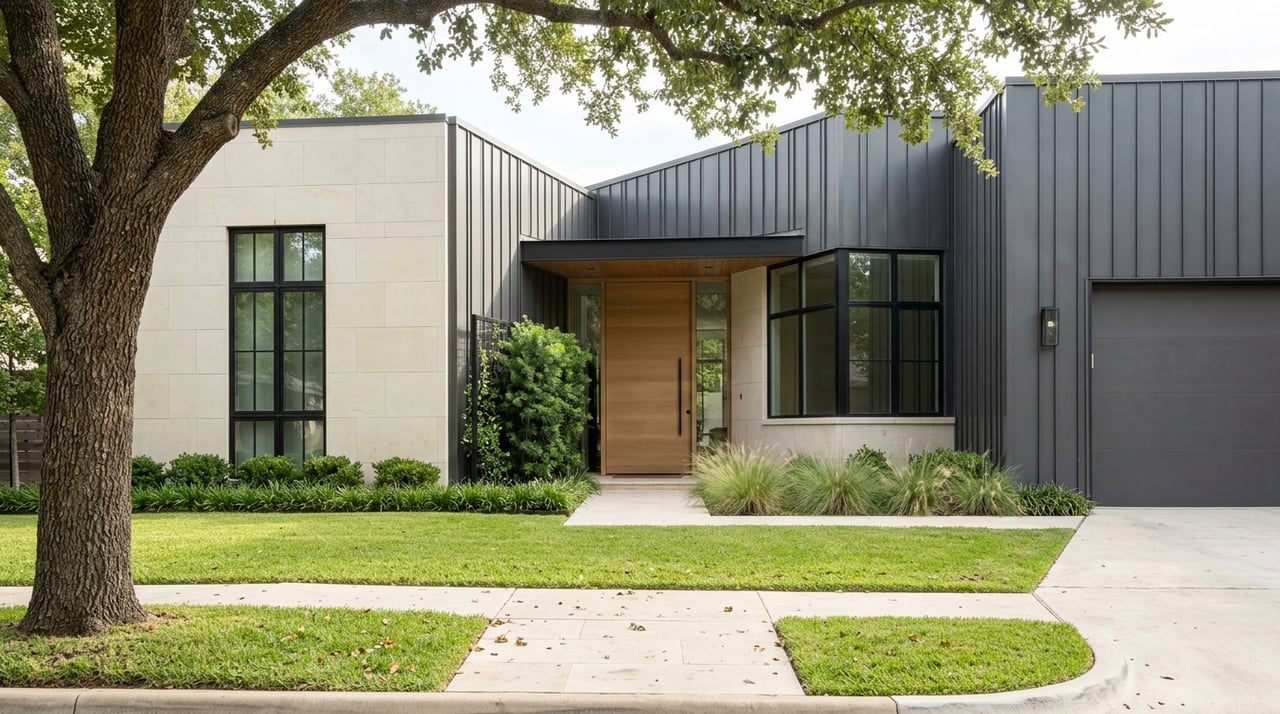
You are not just buying square footage in Tanglewood. You are buying into one of Houston’s most established luxury enclaves, where lot size, deed restrictions, and long-term design potential can matter as much as the home itself. If you are thinking about buying a luxury home in Tanglewood, this guide will help you understand what sets the neighborhood apart, what to watch during your search, and how to evaluate value with more confidence. Let’s dive in.
Why Tanglewood Stands Out
Tanglewood sits in Houston’s Galleria-Uptown area and has a long-established identity as a luxury residential enclave. According to the Tanglewood Homes Association, the neighborhood includes about 1,220 lots across 23 sections and began development in 1949. That history helps explain why Tanglewood feels more established and more structured than many other inner-loop-adjacent neighborhoods.
Location is a major part of the appeal. HAR describes the area as known for large lots, mature trees, and crescent-shaped streets, along with convenient access to the Galleria-Uptown business district. For many buyers, that mix of privacy, prestige, and central access is what keeps Tanglewood on the shortlist.
What Luxury Buyers Should Expect
Tanglewood is not a one-note neighborhood. Houstonia notes that the area first became known for one-story ranch-style homes on large lots, while much larger European-style homes began appearing in the mid-1980s. Today, that means you may see original homes, major renovations, and newer custom builds all within the same search.
HAR subdivision data reflects that range. The median lot size is 16,500 square feet, the median home size is 5,547 square feet, and the median year built is 1990. In practical terms, you are shopping in a market where land value, architectural style, and renovation quality all play a big role in price.
Common Luxury Features
In the upper tier of Tanglewood, many homes are designed for entertaining and everyday comfort. Recent listing examples in the neighborhood have included features such as:
- Pools and spas
- Outdoor or summer kitchens
- Wet bars
- Wine rooms or wine vaults
- Home offices or libraries
- Elevators
- Generators
- Oversized garages
- Whole-home automation
These features can help a property stand out, but they should still be evaluated in context. In Tanglewood, a long feature list does not automatically mean a home is priced well for its lot, section, or long-term resale position.
Why Deed Restrictions Matter
One of the biggest things that separates Tanglewood from a more flexible neighborhood is the role of deed restrictions. The Tanglewood Homes Association says restrictions are mostly similar across the 23 sections, but there are minor differences by section. Those rules can cover residential use, setback lines, roof and wall materials and colors, garage orientation, fence height and location, residence orientation, driveway entry location, and sign rules.
That matters whether you want a move-in-ready home or a future project. THA also states that work outside the home generally requires association approval. So if you are considering a remodel, an addition, a pool redesign, or even major site changes, you need to understand the approval path before you close, not after.
Why the Section Matters
Two homes may look similar online but offer very different long-term options. A large lot can be attractive, but the real question is how that lot works within its section’s restrictions and review process. In Tanglewood, section-specific rules can affect build lines, garage placement, fencing, and how exterior plans move forward.
For that reason, plan-checking should be part of the buying process. If you are buying with any intention to update, expand, or rebuild later, the section matters just as much as the address.
Understanding Tanglewood Pricing
Tanglewood commands a premium within 77056, and it is important to use the right data set when you evaluate that premium. HAR’s subdivision-specific Tanglewood page currently shows 19 homes for sale and 3 for rent, with a median appraised value of $2,299,056, a median market value of $2,437,657, and a median sold price per square foot of $481.03. That is the more precise benchmark for the subdivision itself.
By comparison, HAR’s broader 77056 ZIP code page shows 217 homes for sale and an average home price of $1,093,456 at $325 per square foot in January 2026. On that simple comparison, Tanglewood’s median sold price per square foot is about 48% higher than the wider 77056 average. That helps illustrate the premium buyers are paying for the enclave, not just for a house in the ZIP code.
Use the Right Tanglewood Data
This is where many buyers can get tripped up. HAR’s broader “Tanglewood Area” page includes a larger surrounding market and shows lower average pricing and smaller average home sizes than the subdivision-specific Tanglewood numbers. If you are buying in the actual Tanglewood subdivision, the subdivision page gives you the cleaner benchmark.
That distinction matters when you are comparing value. A home may seem expensive against a broad area average, yet feel more reasonable once you compare it to subdivision-level pricing, lot patterns, and design standards.
What the Current Houston Market Means for Buyers
The broader Houston market has shifted toward better balance. HAR’s April 2026 MLS update says active single-family listings rose 6.5% year over year to 36,572, while average and median pricing eased modestly. HAR’s May 2026 update also says buyers are more selective and expect homes to be ready for occupancy or priced to reflect needed updates.
For you as a Tanglewood buyer, that creates a more nuanced environment. You may have more room to negotiate than in a tighter market, but well-located, well-priced luxury homes can still move quickly because subdivision inventory remains limited. In other words, selectivity has increased, but strong properties still attract attention.
How to Evaluate a Tanglewood Home
When you tour homes in Tanglewood, it helps to look beyond finishes. A beautiful kitchen or dramatic entry can capture attention, but luxury value here often comes down to a mix of location within the neighborhood, lot utility, design quality, and future flexibility. That is especially true in a market with both updated classics and newer custom homes.
Here are a few practical areas to review closely:
- Lot and survey details: Confirm boundaries and how the house sits on the lot.
- Section-specific restrictions: Review the rules that apply to that section, not just the neighborhood in general.
- Setbacks and build lines: Understand how they may affect additions or future rebuilding.
- Garage and driveway orientation: These details can be governed by restrictions.
- Fence and exterior rules: Check what may need approval.
- Renovation quality: Look at materials, layout changes, and how well updates fit the home.
In Tanglewood, two homes with similar bedroom counts may have very different value if one offers cleaner future options or stronger renovation execution.
Move-In Ready vs. Updated vs. Rebuild
Many luxury buyers in Tanglewood end up choosing between three paths. You may buy a newer or move-in-ready home, an older home that has been significantly updated, or a property where the lot itself supports a future custom project. Each path can make sense, but each should be priced differently.
A newer custom home may justify a premium if the design, construction, and lot fit are strong. A deeply updated classic can also be compelling if the renovation quality is high and the layout works for modern living. A teardown or major-project property may offer long-term upside, but only if the lot, restrictions, and approval path align with your goals.
Offer Strategy in Tanglewood
In a selective but still limited luxury market, offer strategy matters. If you find a move-in-ready home that is well located, well priced, and clearly aligned with buyer expectations, it often makes sense to be prepared with strong financial documentation and a clean offer structure. Trying to win only on price can be less effective than pairing a fair number with clear execution.
For homes that need work, the analysis gets more detailed. You will want to weigh not only cosmetic updates, but also the likely cost of bringing the property up to the neighborhood standard and whether the lot supports your long-term vision. In Tanglewood, that design and construction lens can materially affect what a property is truly worth to you.
Don’t Overlook Property Taxes
Before you finalize an offer, confirm the actual tax picture for the property. HAR’s Tanglewood tax line item shows that bills can include city, county, school-district, flood-control, hospital-district, and community-college components, and it notes that tax type varies by property. That means the tax burden is not something you should estimate casually.
If a home has any exemptions in place, you will also want to understand how your ownership may affect the future bill. In a luxury price range, even small assumptions can create a meaningful budgeting gap.
Why Local Guidance Matters
Buying in Tanglewood is rarely just about finding the prettiest listing. It is about understanding how neighborhood structure, design standards, lot potential, and current pricing all intersect. That is where experienced local guidance becomes especially valuable.
At Arriaga Realty, the approach is consultative and design-forward, which fits a neighborhood like Tanglewood well. When you are comparing a newer custom home, a renovated classic, or a lot with future build potential, that kind of insight can help you make a more informed decision with fewer surprises. If you are planning your next move in Tanglewood, Arriaga Realty LLC can help you evaluate the options with clarity and confidence.
FAQs
What makes buying a luxury home in Tanglewood different from buying elsewhere in 77056?
- Tanglewood is a more defined luxury enclave with subdivision-specific pricing, large lots, and deed restrictions that can affect exterior changes, additions, and future plans.
What should buyers review before remodeling a Tanglewood home?
- You should review the property survey, section-specific deed restrictions, setback and build-line implications, and the Tanglewood Homes Association approval requirements for exterior work.
How large are lots in the Tanglewood subdivision?
- HAR subdivision data shows a median lot size of 16,500 square feet, which is about 0.38 acre.
How expensive is Tanglewood compared with the rest of 77056?
- HAR data shows Tanglewood’s median sold price per square foot at $481.03, compared with $325 per square foot for the broader 77056 ZIP code in January 2026.
Are move-in-ready luxury homes in Tanglewood still competitive?
- Yes. Even in a more balanced Houston market, limited subdivision inventory means well-located and well-priced move-in-ready homes can still attract strong buyer interest.
Why do section rules matter when buying in Tanglewood?
- Tanglewood was built in 23 sections, and while the deed restrictions are mostly similar, minor differences by section can affect setbacks, garage orientation, fence rules, and exterior approval paths.
